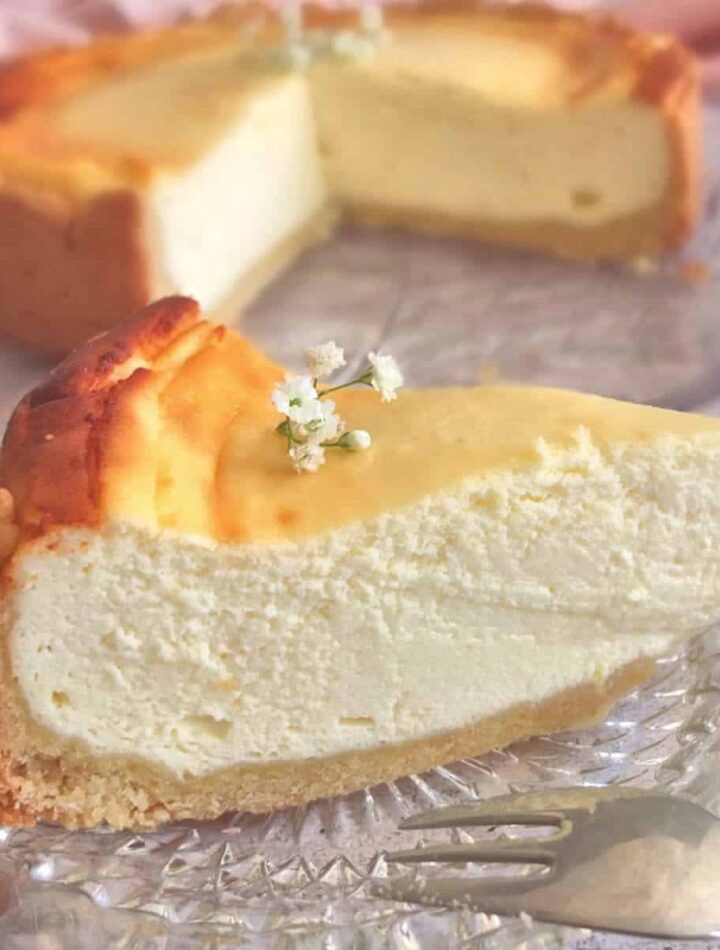
If you have sourdough discard sitting in the refrigerator, don’t let it go to waste—turn it into this Sourdough Italian Cheesecake. This cheesecake combines the rich creaminess of American cheesecake with the lighter, slightly rustic character of an Italian-style ricotta cake. The sourdough discard adds a gentle tang that balances the sweetness, while lemon and vanilla bring a bright, fresh flavor.
Unlike a dense New York cheesecake, this version has a wonderfully soft and creamy center with a subtle ricotta texture. A buttery crumb crust gives it a delicious contrast. Serve it chilled with a dusting of powdered sugar, fresh berries, or a little lemon zest, and you have an impressive homemade dessert that looks fancy without being complicated.
Ingredients
For the Crust
- 2 cups graham cracker crumbs
- ¼ cup granulated sugar
- 6 tablespoons unsalted butter, melted
- ¼ teaspoon salt
For the Cheesecake Filling
- 16 ounces full-fat cream cheese, softened
- 15 ounces whole-milk ricotta cheese
- ½ cup sourdough discard
- ¾ cup granulated sugar
- 3 large eggs, room temperature
- 1 teaspoon pure vanilla extract
- 1 tablespoon fresh lemon juice
- 1 teaspoon finely grated lemon zest
- 2 tablespoons all-purpose flour
- ¼ teaspoon salt
For the Topping
- Powdered sugar, for dusting
- Fresh strawberries, raspberries, or blueberries
- Extra lemon zest
- Whipped cream, optional
Instructions
1. Prepare the Oven and Pan
Preheat your oven to 325°F (165°C). Lightly grease a 9-inch springform pan. For easier removal, place a round piece of parchment paper on the bottom of the pan.
If you want extra protection against leaks, wrap the outside bottom of the springform pan with a layer of aluminum foil.
Before beginning the filling, make sure your cream cheese, eggs, and ricotta aren’t ice-cold. Room-temperature ingredients blend much more smoothly.
2. Make the Crust
Add the graham cracker crumbs, granulated sugar, salt, and melted butter to a medium bowl. Mix until all the crumbs are evenly coated with butter.
The mixture should resemble damp sand and hold together when pressed between your fingers.
Pour the mixture into the prepared springform pan. Press it firmly and evenly across the bottom using the back of a measuring cup or the bottom of a glass.
Bake the crust for 8–10 minutes, just until it smells buttery and looks lightly golden. Remove it from the oven and allow it to cool while you prepare the filling.
3. Prepare the Ricotta
Ricotta can contain quite a bit of moisture, so draining it is an important step.
Place the ricotta in a fine-mesh strainer over a bowl and let it drain for approximately 30 minutes. If your ricotta is already thick and fairly dry, you can skip this step.
For an especially smooth cheesecake, you can also press the drained ricotta through the fine-mesh strainer with the back of a spoon. This breaks up larger curds and creates a silkier filling.
4. Make the Cheesecake Filling
Place the softened cream cheese and sugar in a large mixing bowl. Beat on medium-low speed until smooth and creamy.
Add the drained ricotta and sourdough discard. Mix until combined, scraping down the sides of the bowl as needed.
Add the eggs one at a time, mixing gently after each addition. Don’t whip the mixture excessively. You want the filling creamy and smooth, not full of air bubbles.
Add the vanilla extract, lemon juice, lemon zest, flour, and salt. Mix just until everything is incorporated.
The finished batter should be thick, creamy, and completely combined.
5. Fill the Pan
Pour the cheesecake mixture over the cooled crust. Use a spatula to smooth the surface.
Gently tap the pan against the counter once or twice to remove any large air pockets.
Don’t worry if the filling looks slightly thicker than traditional cheesecake batter. The ricotta and sourdough discard give this recipe its distinctive texture.
6. Bake the Cheesecake
Place the cheesecake in the center of the preheated oven.
Bake for approximately 55–70 minutes. Baking time will vary slightly depending on your oven and the moisture content of your ricotta.
The cheesecake is ready when the edges are set but the center still has a slight wobble when the pan is gently moved.
Don’t bake until the center is completely firm. It will continue cooking from residual heat and become firmer as it cools.
7. Cool Gradually
When the cheesecake is finished baking, turn off the oven and leave the door slightly open. Let the cheesecake remain inside for about 30 minutes.
This gradual temperature change helps reduce the chance of the cheesecake cracking or sinking dramatically.
Remove the cheesecake from the oven and place it on a cooling rack. Let it cool completely at room temperature.
Once cooled, cover the pan and refrigerate for at least 6 hours. For the best texture and flavor, refrigerate it overnight.
8. Finish and Serve
When you’re ready to serve, carefully run a thin knife around the edge of the cheesecake before releasing the springform pan.
Dust the top generously or lightly with powdered sugar, depending on how sweet you like your desserts.
Add fresh berries, lemon zest, or a small spoonful of whipped cream just before serving.
For clean slices, use a sharp knife dipped in hot water and wiped dry between cuts.
Why Sourdough Discard Works So Well
Sourdough discard isn’t only useful for pancakes, muffins, and bread. Its mild acidity works beautifully in creamy desserts.
In this cheesecake, the discard adds a subtle tang that complements the rich cream cheese and naturally creamy ricotta. It also gives the dessert a little more depth than a traditional cheesecake.
You don’t need active, bubbly sourdough starter for this recipe. Unfed sourdough discard works perfectly.
For the best result, use discard that has been stored properly and has a pleasantly tangy, fermented smell. If it smells rotten, unusually harsh, or shows signs of mold, don’t use it.
Tips for Perfect Italian Cheesecake
Drain the ricotta well. Excess liquid can make the cheesecake too soft.
Use full-fat dairy. Low-fat cream cheese and ricotta contain more water and won’t give you the same rich texture.
Don’t overmix the eggs. Too much air can cause the cheesecake to puff and crack.
Don’t rush the cooling process. A slow cooling period helps the cheesecake maintain a beautiful texture.
Chill before slicing. Even if the cheesecake looks set after cooling, refrigeration gives it the firm, creamy consistency you’re looking for.
Use fresh lemon. Bottled lemon juice won’t provide quite the same bright flavor or fragrant zest.
Delicious Variations
Orange Ricotta Cheesecake
Replace half of the lemon zest with finely grated orange zest. Add a tiny splash of orange extract for even more citrus flavor.
Chocolate Chip Version
Fold ½ cup mini chocolate chips into the finished batter before pouring it into the crust. This creates a cheesecake with flavors reminiscent of Italian cannoli.
Berry Topping
After chilling, cover the cheesecake with fresh strawberries, raspberries, or blueberries. A spoonful of homemade berry sauce makes it even more special.
Almond Variation
Add ½ teaspoon of almond extract to the filling and sprinkle sliced almonds over each serving.
Recipe Card
Recipe: Sourdough Delicious Italian Cheesecake
Prep Time: 25 minutes
Bake Time: 55–70 minutes
Cooling & Chilling: 6–8 hours
Total Time: About 7½ hours
Yield: 10–12 slices
Course: Dessert
Cuisine: Italian-inspired
Method: Baking