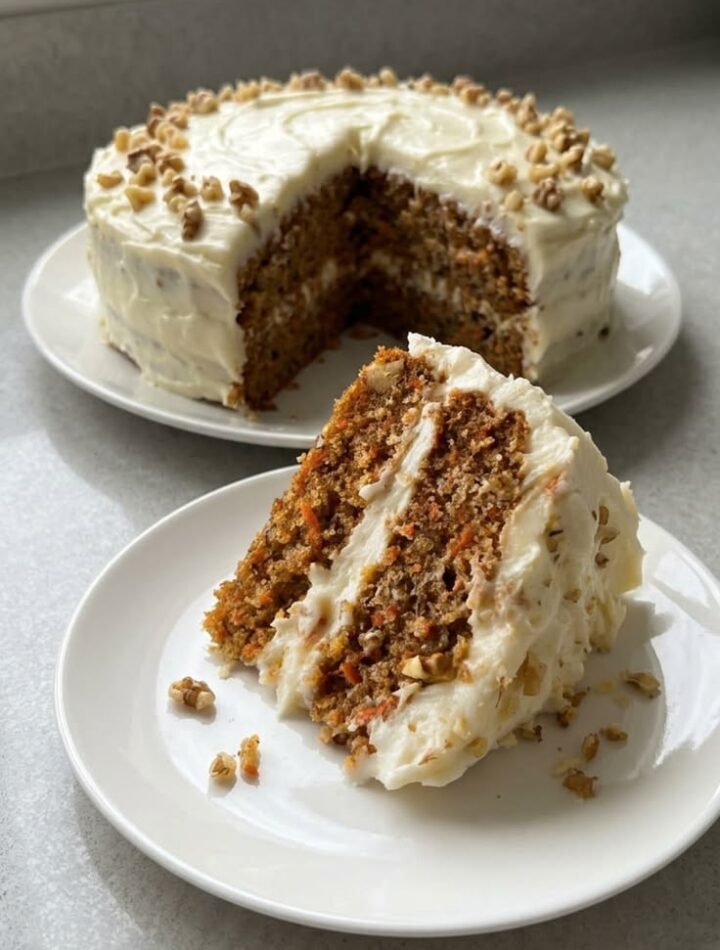
The carrot cake is a culinary paradox: a vegetable-heavy dessert that feels like pure indulgence. The goal is a cake that is dense but not heavy, spiced but not bitter, and moist without being oily. To achieve this, we rely on the harmony between the acidity of the brown sugar and the lift of the baking soda, alongside the moisture released by the carrots as they bake.
The Mise en Place (Ingredients)
The Dry Foundation
- 2 cups (250g) All-Purpose Flour: Provides the structure. Do not use cake flour here; you need the protein content of AP flour to support the heavy carrots and nuts.
- 2 tsp Baking Soda: The primary leavening agent. It reacts with the acidic brown sugar to create lift.
- 2 tsp Ground Cinnamon & 1 tsp Ground Ginger: The “warmth” profile. For a deeper flavor, add a 1/2 tsp of Ground Nutmeg.
- 1/2 tsp Fine Sea Salt: Essential to sharpen the sweetness.
The Sweet & Wet Core
- 1 cup (200g) Granulated White Sugar: For sweetness and a crisp edge.
- 1/2 cup (100g) Packed Light Brown Sugar: For moisture and a hint of molasses.
- 1 cup (240ml) Neutral Oil: Use canola, vegetable, or grapeseed. Oil is superior to butter in carrot cake because it remains liquid at room temperature, ensuring a softer “mouthfeel.”
- 4 Large Eggs: Room temperature is vital for proper emulsification.
- 1 tbsp Pure Vanilla Extract: Use the good stuff; it makes a difference.
The Texture & Bulk
- 3 cups Grated Carrots: Approximately 5–6 medium carrots.
- Optional Mix-ins: 1/2 cup chopped toasted pecans and 1/4 cup golden raisins.
The Velvet Frosting
- 8 oz (225g) Full-Fat Cream Cheese: Must be brick-style, not the spreadable tub version.
- 1/2 cup (115g) Unsalted Butter: Softened to room temperature.
- 2 cups (240g) Powdered Sugar: Sifted to avoid lumps.
- 1 tsp Vanilla & a pinch of Salt.
The Technical Execution
Step 1: Preparation of the Oven and Pans
Preheat your oven to 175°C (350°F). Position your rack in the center. Grease two 9-inch round pans with butter, then line the bottoms with parchment paper. This is your insurance policy against the cake sticking.
Step 2: The Grating Secret
Do not use pre-shredded carrots. They are coated in starch to keep them from sticking, which prevents them from softening into the cake. Use the fine side of a box grater. The smaller the shred, the more “melted” the texture will be.
Step 3: The Emulsion
In a large bowl, whisk the oil, granulated sugar, and brown sugar until smooth. Add the eggs one at a time, whisking vigorously after each addition. You are looking for a slightly pale, thickened mixture. Stir in the vanilla.
Step 4: Folding and Incorporation
In a separate bowl, whisk your dry ingredients (flour, soda, spices, salt). Slowly fold the dry ingredients into the wet. Stop when you see only a few streaks of flour remaining. Over-mixing develops gluten, which turns a tender cake into a rubbery one. Gently fold in the carrots and any nuts or raisins.
Step 5: The Bake
Divide the batter equally between the pans. Bake for 30–35 minutes. The kitchen will smell like autumn. The “Done” Test: A toothpick should come out with a few moist crumbs attached. If it’s wet, give it 3 more minutes.
Step 6: The Cooling Mandate
Let the cakes sit in the pans for 10 minutes, then invert onto a wire rack. They must be completely cold before frosting. A slightly warm cake will melt the butter in the frosting, turning your masterpiece into a sliding disaster.
The “Tangy” Crown (Frosting)
The frosting is the counterpoint to the spice. In a stand mixer, beat the cream cheese and butter together for at least 3 minutes until very pale and fluffy. Add the powdered sugar half a cup at a time on low speed. Once incorporated, crank it to high for 60 seconds. This aerates the frosting, giving it that “whipped” cloud-like texture.
Troubleshooting and Tips
- Flat Cake? Your baking soda might be expired. Test it by dropping a pinch in vinegar; if it doesn’t fizz aggressively, toss it.
- Soggy Bottom? You may have used jumbo eggs or very watery carrots. Stick to large eggs and don’t “squeeze” the carrots after grating.
- Leveling: if the cakes have a dome, use a serrated knife to gently saw off the top for a flat stacking surface. Use the scraps for “chef’s snacks.
Storage and Maturation
Carrot cake is one of the rare bakes that improves with age. The moisture from the carrots continues to hydrate the crumb over 24 hours. Store in an airtight container in the fridge. For the best flavor, take it out 20 minutes before serving to let the frosting soften slightly.
This recipe yields a cake that is structurally sound enough for a party, yet tender enough for a quiet tea. It is a timeless classic, perfected through patience and the right ratio of spice.