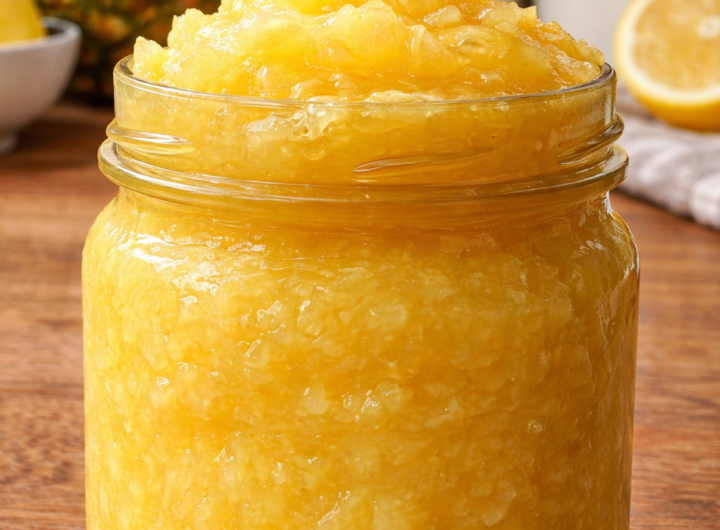
If you’ve never tasted Monkey Butter, you’re in for a treat. This golden, tropical spread is a delightful blend of bananas, pineapple, coconut, and sugar, simmered together until thick, glossy, and irresistibly fragrant. Sweet, fruity, and lightly caramelized, Monkey Butter tastes like sunshine in a jar—and once you try it, you’ll understand why it has become a beloved classic in Southern kitchens and home canneries.
Monkey Butter is one of those old-fashioned recipes that feels both nostalgic and exciting. It’s not quite jam, not quite butter, and not quite fruit curd—but it borrows the best qualities of all three. Smooth yet slightly textured, spoonable yet spreadable, it’s perfect on toast, biscuits, pancakes, waffles, muffins, or even swirled into yogurt and oatmeal.
Whether you’re making it to preserve ripe bananas, give as a homemade gift, or simply stock your pantry with something special, Monkey Butter is a recipe worth savoring.
What Is Monkey Butter?
Monkey Butter is a sweet fruit spread made primarily from mashed bananas and crushed pineapple, often with coconut and lemon juice added for balance. Despite its name, it contains no actual butter. The “butter” refers to its smooth, rich, spreadable texture—similar to apple butter or pumpkin butter.
The flavor is tropical and dessert-like, with natural banana sweetness, bright pineapple tang, and subtle coconut warmth. It’s typically cooked on the stovetop and can be enjoyed fresh, refrigerated, or preserved through water-bath canning.
Why Is It Called Monkey Butter?
The exact origin of the name is unclear, but most food historians agree it likely comes from the association between monkeys and bananas. Over time, the playful name stuck, and Monkey Butter became a charming, memorable way to describe this banana-based spread.
Regardless of the name, one thing is certain: it’s incredibly addictive.
Why You’ll Love This Recipe
Monkey Butter has earned its place as a pantry favorite for many reasons:
- Uses simple, affordable ingredients
- Perfect for overripe bananas
- No pectin required
- Versatile and multi-purpose
- Great for gifting
- Easy to make in one pot
It’s also a wonderful beginner-friendly preserving recipe, since it doesn’t require complicated techniques or special equipment beyond basic canning tools.
Flavor and Texture Profile
Monkey Butter is:
- Sweet but not cloying
- Smooth with slight fruit texture
- Brightened by citrus
- Lightly caramelized from cooking
As it cooks, the sugars deepen, the bananas mellow, and the pineapple adds just enough acidity to keep the spread lively and balanced.
Ingredients Breakdown
Each ingredient plays a key role in taste, consistency, and preservation.
Bananas
The foundation of the recipe. Very ripe bananas are best—they’re sweeter, softer, and easier to mash.
Pineapple
Crushed pineapple adds moisture, tang, and natural acidity, which balances the banana’s sweetness and helps with preservation.
Sugar
Sugar sweetens and thickens the mixture while also acting as a preservative. White granulated sugar is traditional, but small variations are possible.
Coconut
Shredded coconut adds texture and enhances the tropical flavor. Sweetened or unsweetened both work.
Lemon Juice
Essential for brightness and acidity. It balances sweetness and helps ensure safe canning.
Ingredients List
- 4 cups mashed ripe bananas (about 8–10 bananas)
- 1 can (20 oz) crushed pineapple, undrained
- 3 cups granulated sugar
- ½ cup shredded coconut
- ¼ cup bottled lemon juice
Step-by-Step Instructions
Step 1: Prepare the Fruit
Peel the bananas and mash them until mostly smooth. Small lumps are fine—they add texture. Measure carefully to ensure proper balance.
Step 2: Combine Ingredients
In a large, heavy-bottomed pot, combine mashed bananas, crushed pineapple (with juice), sugar, shredded coconut, and lemon juice. Stir well to combine.
Step 3: Cook the Mixture
Bring the mixture to a gentle boil over medium heat, stirring frequently to prevent sticking. Once boiling, reduce heat to a steady simmer.
Cook uncovered for 20–30 minutes, stirring often, until the mixture thickens and turns glossy. It should mound slightly on a spoon when ready.
Step 4: Test Consistency
To test thickness, place a small spoonful on a cold plate. If it holds its shape and doesn’t run, it’s ready.
Step 5: Use or Preserve
At this point, Monkey Butter can be:
- Used immediately
- Refrigerated
- Frozen
- Or canned for long-term storage
Water-Bath Canning Instructions (Optional)
If you’d like to preserve Monkey Butter:
- Sterilize jars and keep them hot.
- Ladle hot Monkey Butter into jars, leaving ¼-inch headspace.
- Remove air bubbles and wipe rims clean.
- Apply lids and rings finger-tight.
- Process in a boiling water bath for 10 minutes (adjust for altitude).
- Remove and cool undisturbed for 12–24 hours.
Once sealed, jars can be stored in a cool, dark place for up to 1 year.
Texture Tips for Perfect Monkey Butter
- Use very ripe bananas for smoothness
- Stir frequently to avoid scorching
- Cook low and slow for best flavor
- Don’t overcook—too thick can become sticky
Variations and Flavor Twists
Monkey Butter is wonderfully adaptable.
Cinnamon Monkey Butter
Add 1 teaspoon ground cinnamon for warmth and depth.
Vanilla Monkey Butter
Stir in 1 tablespoon vanilla extract after cooking.
Rum-Style Monkey Butter
Add 1–2 teaspoons rum extract for a dessert-like twist.
Reduced-Sugar Version
You can reduce sugar slightly, but note this may affect shelf life if canning.
How to Use Monkey Butter
Monkey Butter is incredibly versatile:
- Spread on toast, biscuits, or English muffins
- Swirled into yogurt or oatmeal
- Topped on pancakes or waffles
- Used as a cake or cupcake filling
- Spread on banana bread
- Added to smoothies or milkshakes
It’s also wonderful paired with peanut butter for a tropical twist on a classic sandwich.
Storage and Shelf Life
- Refrigerator: Up to 3 weeks
- Freezer: Up to 6 months
- Canned: Up to 1 year (properly sealed)
Always refrigerate after opening.
Common Mistakes
- Using underripe bananas
- Not stirring frequently enough
- Skipping lemon juice
- Overcooking until too stiff
- Not measuring fruit accurately when canning